Vet Nursing Awareness Month - What Registered Veterinary Nurses Want You To Know About Your Pet's Joint Health

Not only is May bringing beautiful weather and the start of summer, but more importantly, it’s Veterinary Nursing Awareness Month!
Here at Vetz Petz, we love our Vet Nurses; they are the centre of clinics, quietly working to make pets better. Pouring love into everything they do.
So, let’s try to make things a tiny touch easier for them, and learn what they’d like you to know about joint health, so that you can help them to help your pets.
1. Joint stiffness isn’t just an old pet issue - start supporting your pets when they’re young
We think of joint health issues as being mostly in senior pets, but that’s not the case, and it’s important to consider your pet’s mobility from a young age. Many animals are predisposed to joint stiffness due to their breed, size, lifestyle, or activity level, among other things. Stiffness can start early in life, but you may not notice it until they are much older. Thinking proactively about their joint health when they are young can have a hugely beneficial knock-on effect as they age.
2. It’s all about the little signs
Of course, if your dog or cat can barely hobble about, you’d be heading straight for the vets. But signs of joint stiffness can be subtle, so keep a close eye on your pet to make sure they’re still active and mobile, and not giving you little hints that they might need joint support.
Signs to watch out for are:
-
Reluctance to move - Not wanting to get up, or being slow on their walks
-
Grumpy or withdrawn - They may not want to interact as much, might seem grumpy, or take themselves away from it all.
-
Grooming - They might not be able to reach everywhere, and so could look a little scruffy. On the flip side, you might notice them grooming some areas more than others.
-
Toilet accidents - Maybe lifting their leg is tricky, and they’ve started squatting, or they wobble in their squat. Cats might miss their litter tray or have accidents in odd places.
All of these are small, subtle signs that your pet might need joint support. Keep a close eye on them, as they are easy to miss, and it’s often only when you know to look out for them that you notice them.
We would always recommend that if you notice any of these things, you take your pet to the vet for a checkup.
3. Weight management is vital to your pet’s mobility
Weight management is vital to your pet’s long-term health, but it also has a huge impact on their mobility and the likelihood of them having stiff joints as they age.
Fat tissue itself is “pro-inflammatory”; it’s an active tissue releasing hormones that impact the entire body, including the joints. This means that being overweight isn’t just about carrying too much mass, the fat tissue itself is having an impact on their health.
Of course, the extra weight also impacts physically on your pet’s joints, putting extra pressure through them and changing how they move, all of which can have a negative long-term effect.
Almost all vet clinics run nurse-led weight management clinics, helping pet parents reduce their pet’s weight, keeping them slim and healthy, and reducing weight on their joints.
Learn more about obesity and joint health here.
4. Think about your home setup
Your pet is affected by their home environment just as you are, and when they have stiff joints, getting around their home can be tricky.
Consider:
-
Slippery floors - Hard floors can cause dogs to slip, which could cause joint injuries. Pets often change their movement patterns across slippery surfaces, too, which may mean they’re moving their stiff joints in less-than-ideal ways. Where you can, cover the routes they most often take across slippery floors with rugs. (You could even put down a yoga mat.)
-
Stairs - If possible, limit their access to upstairs to reduce the amount they use the stairs. If they need to use stairs, consider putting them in a harness with a handle to support them on the way up and down.
-
Beds - A comfortable bed is vital to your dog’s sleep quality. Being too squishy or too hard can make them feel achy in the morning. Look for a supportive, orthopaedic bed that’s easy to get in and out of, while protecting them from drafts and cold floors.
-
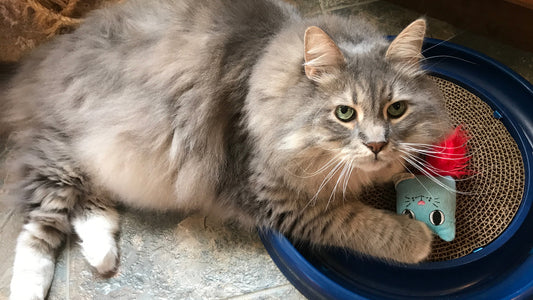
Steps to snooze spot - Cats love to sleep up high, but often, if they have joint stiffness, getting to their favourite snooze spot is a challenge. If you notice they’re sleeping in new places, or making a few hesitant attempts to jump up, see if you can arrange an intermediate step they can reach first, or consider installing cat furniture on the walls to give them safe access up.
5. Head to your local Vet Nurse mobility clinic
Vet Nurse mobility clinics are your best source of support for your pets. Often free or low-cost, you get expert support from your nurses. They’ll assess your pet’s mobility and range of motion, teach you gentle exercises you can do to support them, or build up their mobility. They’ll advise on weight management, feeding, supplements, and changes you can make in your home. They may even be able to provide physiotherapy, massage or other forms of therapy such as laser therapy, or direct you to the right places.
Regular visits enable your Vet Nurse to track your pet’s progress, tweak their management, and keep your pet mobile and moving for years to come.
Back them up with the right supplement
When you head to your Vet Nurse clinic, they will no doubt discuss joint supplements to support your pet and maintain active movement throughout their lives, from puppyhood, right into their golden years.
AntinolⓇ Joint Care Pro is a green-lipped mussel oil supplement that’s 100% natural, powerful, rapidly absorbed, and backed by over 25 years of scientific research. Each tiny capsule contains 20x more joint-supporting fatty acids than green-lipped mussel powder, providing the full spectrum of omega-3s, keeping pets moving, active, and agile.
Owners often ask what to give alongside exercise: our dog joint supplements are a good starting point.
Talk to your Vet or Vet Nurse and order a starter kit today. We believe you will see a difference in your pet, so much so, that if you don’t, you can have your money back with our 100% moneyback guarantee.
Try a risk-free starter pack.
Vet nurses are awesome!
I’m sure they’re far too modest to have this in their “things Vet Nurses want you to know”, but we believe it’s true- Vet Nurses are awesome!
Speak to your vet practice today about booking a mobility clinic.
Happy Veterinary Nursing Awareness Month!